
Shockwave Therapy in Miami for Chronic Pain and Tendon Injuries
Physician supervised
Treatment is provided under the supervision of our medical director – Dr. Antonio Mesa
Double board-certified by the American Board of Psychiatry and Neurology in Neurology and Pain Medicine

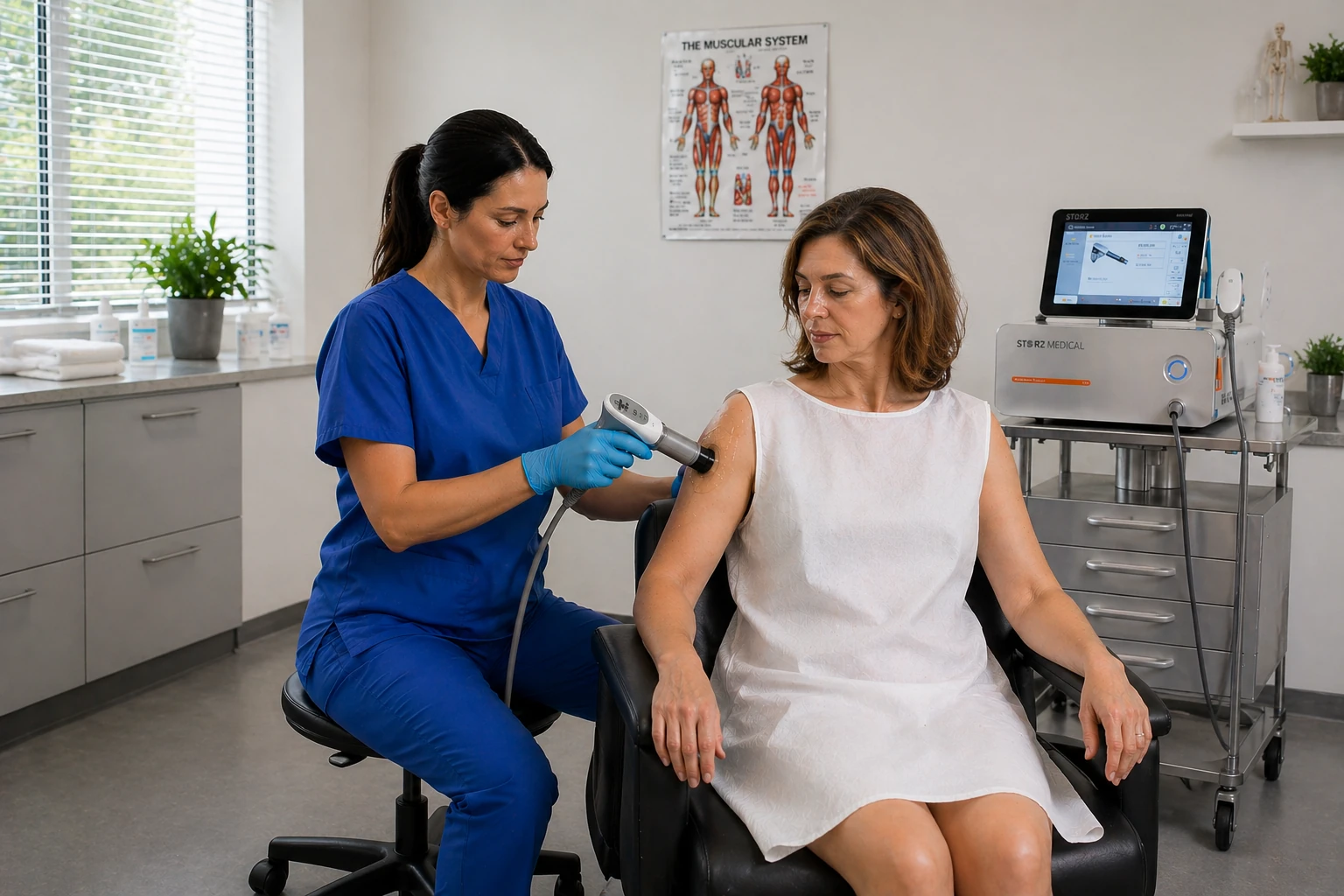
What Is Shockwave Therapy?
Shockwave therapy, also known as acoustic wave therapy, uses high-energy sound waves to stimulate healing in damaged tissues. It is commonly used to treat chronic tendon injuries, plantar fasciitis, and musculoskeletal pain without surgery or injections.
Why Shockwave Therapy Helps
- Non-invasive (no injections or surgery)
- No downtime
- Improves blood flow
- Naturally stimulates tissue repair

Conditions Treated with Shockwave Therapy
Tendon & Overuse Injuries
Tennis elbow
Golfer’s elbow
Achilles tendonitis
Knee tendonitis
Iliotibial band syndrome
Foot & Heel Pain
Plantar fasciitis
Heel spurs
Upper & Lower Body Pain
Shoulder tendonitis
Hip tendonitis
Chronic back pain
Neck pain
Hand Conditions
Trigger finger
Dupuytren’s contracture

Stimulating Blood Flow and New Vessel Growth

Accelerating Tissue Repair and Regeneration

Breaking Up Scar Tissue and Calcifications
What to Expect During Treatment
- Sessions last about 30 minutes
- A course of therapy is typically 5 sessions
- Weekly sessions
- No pain/minimal discomfort
- Recovery is fast – continue with your day after each session
Who Is a Candidate
- You have ongoing pain that limits your movement or daily activities.
- You don’t want to take medications or the medications are not helping.
- You want a non‑invasive treatment that helps stimulate healing without injections, surgery, or downtime
Why See a Pain Medicine Specialist for Shockwave Therapy?
Dr. Mesa evaluates each patient’s pain profile before recommending shockwave therapy, ruling out contraindications such as nerve entrapment, fracture, or inflammatory arthropathy that require different treatment. Because he holds dual board certification in both Neurology and Pain Medicine, he can address both the musculoskeletal source of pain and any neurological components — such as peripheral nerve sensitization — that can prevent full recovery.
What Results Can I Expect?
Evidence & Effectiveness
Shockwave Therapy is supported by strong clinical research for chronic soft‑tissue pain. It improves circulation, reduces inflammation, and promotes healing in conditions like plantar fasciitis, tendonitis, back and neck pain, trigger finger, and early Dupuytren’s. Treatments are performed under the supervision of our medical director with 8 years of experience with shockwave therapy, ensuring safe, targeted, and effective care.
FAQ's
Does shockwave therapy hurt?
Most patients describe shockwave therapy as, at most, mildly uncomfortable but very tolerable. The sensation feels like quick, repetitive taps on the skin. Areas with more inflammation may feel more sensitive, but the intensity can be adjusted to keep you comfortable.
Is shockwave therapy safe?
Is shockwave therapy the same as ultrasound therapy?
What is the Karl Storz D‑Actor 100?
How many sessions are needed?
Typically, a course of therapy lasts for 5 sessions.
Is shockwave therapy covered by insurance?
Some insurances cover it. You may also be able to use your HSA or FSA to pay for this treatment, depending on your plan’s rules. We can provide the documentation your plan may require.
Can shockwave therapy help if I've already tried cortisone injections?
Is shockwave therapy better than injections?
Shockwave therapy isn’t necessarily ‘better’ than injections—they simply work in different ways. Injections can reduce inflammation quickly, while shockwave therapy helps stimulate natural healing in the tendons, ligaments, fascia, or other soft tissue. Many patients choose shockwave therapy when they want a non‑invasive option that is more natural or when pain returns after injections.
What is your office address and telephone number?
3911 SW 67th Avenue
Miami, FL 33155
Telephone: 305-670-7650